Last week I ran into my old colleagues Jason Holzman musings and fell in love with the following:
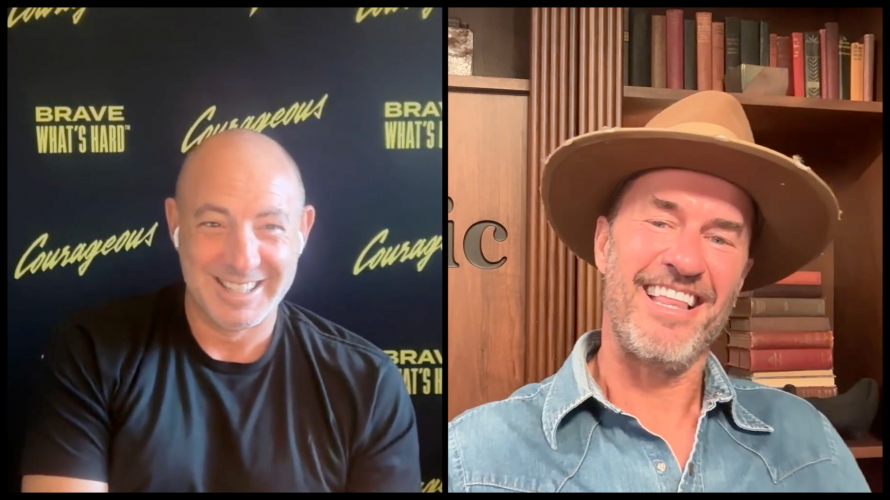
Back when I worked in advertising, one of my colleagues was Simon Sinek who as you probably know is now a best-selling author, with a great podcast called A Bit of Optimism.
One of his podcast guests about a year ago was Trevor Noah, and there’s something they talked about that I thought was interesting for leaders – an observation Trevor made about “small talk”.
I’m paraphrasing a bit, but he pointed out that “big talk” often separates us, while “small talk” connects us.
Put another way, when we talk about big things (like politics) we often reinforce our divide. On the other hand, when we talk about the weather, we find a way to connect.
And the great thing about small talk is that it does more than just connect us through shared reality, it makes the eventual big talk conversations easier.
For leaders, this is a great reminder of how important it is to look for ways to connect with your team beyond the big conversations about projects, assignments, goals, and results.
Office small talk has become a bit of a lost art, especially over the last 5 years, in part because of hybrid work, and in part because of how pervasive digital messaging technology (Slack, Teams, etc) has become as a substitute for one-on-one conversation.
And that decline in banter about what we did over the weekend, or a movie we saw, or a sports team we’re rooting for, has left us more separated and made it more challenging for us to truly connect.
More to the point, when we inevitably DO get to bigger conversations about things like job performance or project deliverables, we feel like we’re on opposite sides of a huge divide.
Small talk won’t, on its own, bring us together.
But it’s worth trying.
Because it turns out, it can have a surprisingly BIG impact.
So good from Jason!
It got me thinking about “The Room Where It Happens”.
Of course, this phrase comes from Hamilton. In the musical, “The Room Where It Happens” is about power—how the most important decisions are made behind closed doors, and how being outside that room means having no real say in the future. Through Aaron Burr, we hear the hunger to stop watching from the sidelines and finally step into the space where influence and history are shaped.
We often get caught up in making a dent in “the room where it happens”.
But, as Jason shares, making a difference starts by connecting in “the room where it doesn’t happen”.
It’s the small moments in the hall ways before a meeting started of actually hearing how someone’s day was or learning about your colleagues kids that bridge real trust. This is where corporate currency grows which pays dividends down the line when you find yourself working on those “room where it happens” decisions.
If you’re a leader, this is your nudge.
Don’t underestimate the power of asking about the weekend.
Or remembering a kid’s name.
Or lingering for 90 seconds longer than necessary.
Those moments don’t slow the work down.