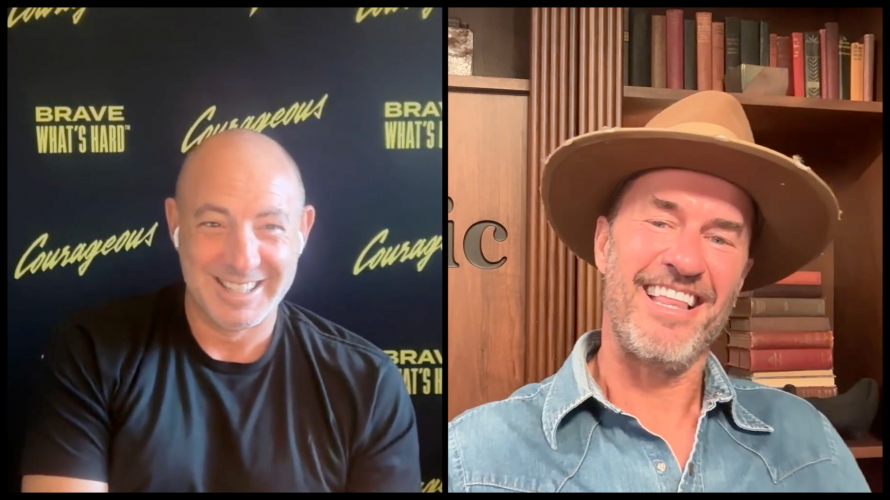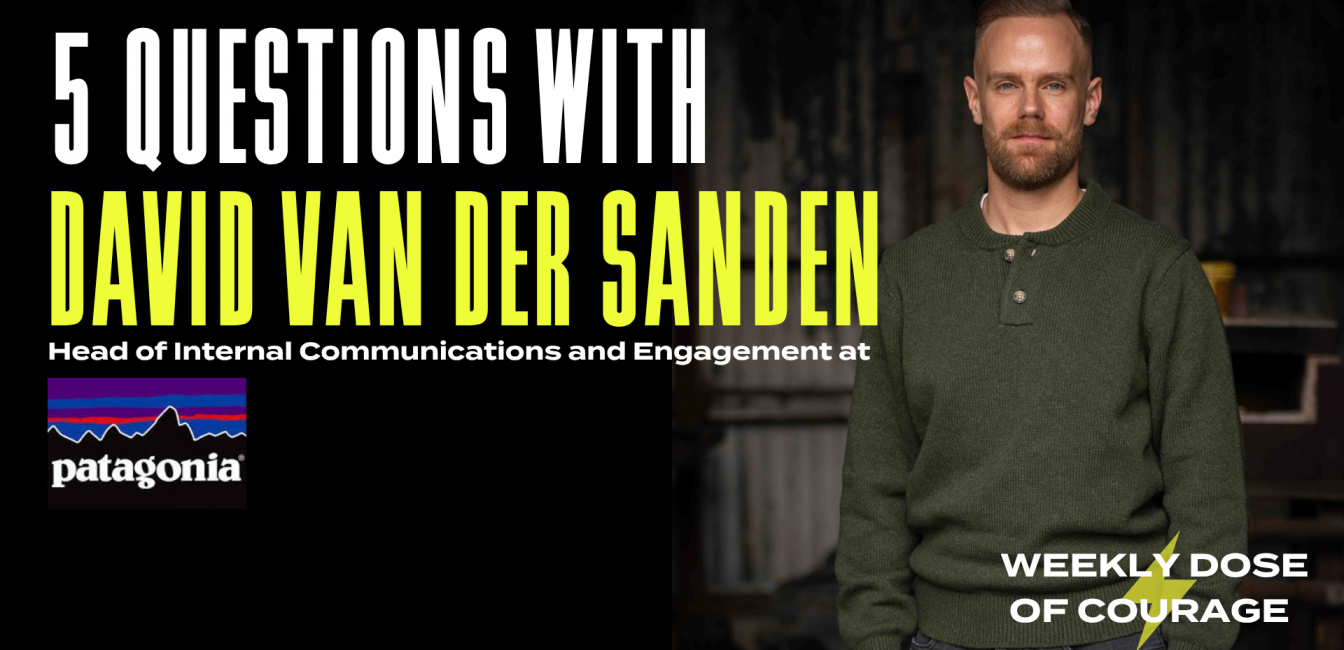
David van der Sanden is the Head of Internal Communications & Engagement at Patagonia.
His job goes well beyond company communications.
I imagine his job feels a lot less like a job or a career and more like a calling.
This feels in alignment with many who are gifted the opportunity to spend their days at Patagonia.
David also joined me previously on The Courageous Podcast for an excellent conversation about Patagonia’s “business unusual” culture, radical honesty and what happens when a company actually lives its purpose.
With a fascinating new Patagonia initiative now out in the world, it felt like the perfect time to bring him back for 5 Questions.
1. You’ve now been at Patagonia for three years. What has working there changed your mind about when it comes to building culture?
Before Patagonia, I probably would have told you that culture could be built through great communications. Three years later, I’d argue that’s giving communications way too much credit.
Culture lives in the gap between what an organization says and what it actually does. You see it in the tradeoffs people make, what gets recognized, how people act, who gets listened to, and what happens when values become inconvenient to an easy answer or solution.
Internal communications can help employees understand a culture. It can make invisible things visible. But by the time my team is telling a story about culture, the culture has already happened.
The biggest shift in my thinking is that culture isn’t built through communication alone. It’s built through simple, everyday choices. Good communication just makes those choices easier to see.
2. A lot of organizations talk about purpose. What advice would you give a leader who wants to do the right thing, but fears the potential backlash that can come with taking a stand?
I think leaders often overestimate the risk of taking a stand and underestimate the risk of standing for nothing.
That doesn’t mean organizations should speak out on everything. In fact, I think one of the hardest disciplines is knowing where you have something credible and additive to contribute, and where you don’t.
Ultimately, to me, a lot of leadership comes down to deciding which horizon you’re optimizing for. If you’re optimizing for the short term, avoiding backlash can seem like the safest choice. If you’re optimizing for the long term, consistency might matter more.
That’s something I’ve thought about a lot. Most reputations aren’t built by the easy decisions. They’re built by the decisions that felt uncomfortable at the time.
3. I generally try not to make this forum about politics. But Patagonia has never been shy about stepping into civic and environmental issues. Your new 11.2 Million Vote Project is explicitly nonpartisan. What is Patagonia trying to accomplish with this initiative, and why did the company believe this was a role it should play?
This initiative isn’t about politics. It’s about participation.
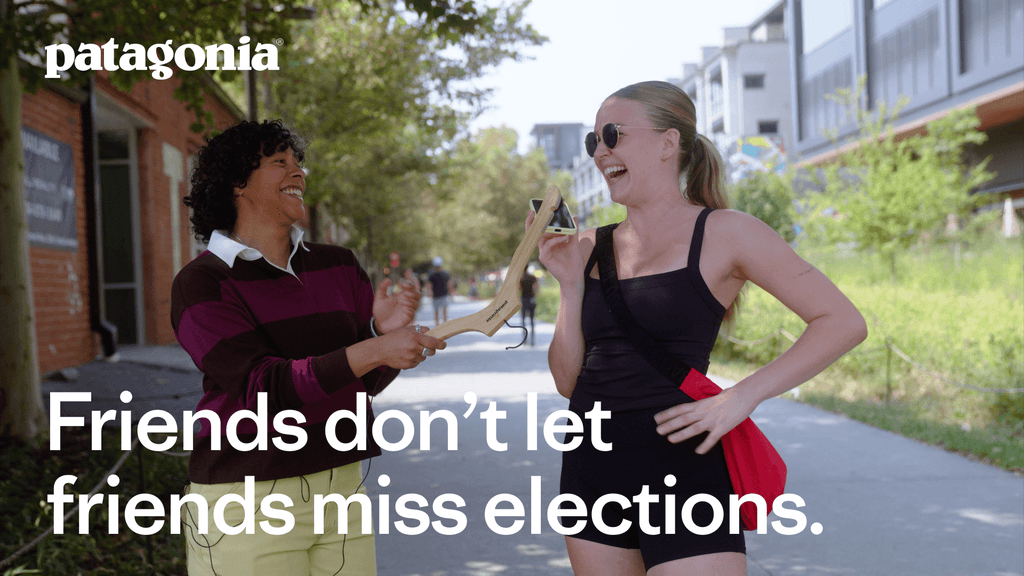
Patagonia has been encouraging people to vote for decades because we believe participation is one of the ways people shape the issues they care about.
What caught our attention is the number itself, provided by the Environmental Voter Project: 11.2 million environmentalists didn’t vote in the last election.
I find that pretty remarkable. Not because those 11.2 million people all think alike, but because it points to a gap between caring about something and engaging in the process that helps shape it.
What I appreciate about the 11.2 Million Vote Project is that it doesn’t try to solve that through advertising or political messaging. It tries to solve it through relationships. We’re not asking people to persuade their friends or tell them who to vote for. We’re asking them to reach out to people they already know and help them make a plan to participate.
In a world where people are starting to tune out institutions, campaigns and ads, I think there’s something refreshingly simple about that idea.
4. I like how Patagonia is literally putting its money where its mouth is. If I read this correctly, when you help people get three friends to make a plan to vote, you earn a $100 Patagonia credit. I’m especially curious about this through your lens. What has to happen inside the organization for something like this to come to fruition? I’m thinking about Stakeholders and Process.
Honestly, this was very much a team effort. I think people sometimes imagine somebody has a big idea, walks into a room, everyone nods, and a few months later it’s out in the world.
The reality is that the more unconventional an idea is, the more people it touches and the more questions it creates. That’s especially true for something like the 11.2 Million Vote Project.
You’ve got people looking at it through a legal lens, an activism lens, a retail lens, and a communications lens. Everybody’s pulling on a different thread.
The part I actually enjoy is that tension. If everyone agrees immediately, it’s usually a sign the idea isn’t very interesting. The best ideas tend to survive a lot of scrutiny. They get challenged, reshaped and improved by people who see risks and opportunities you hadn’t thought about.
And frankly, trying something like this requires a company culture that’s comfortable being a little uncomfortable. You need people willing to think bigger than what’s been done before, but you also need people willing to raise their hand and say, “Hold on, have we thought about this?”
5. There’s no growth without change. There’s no change without courage. There’s no courage without fear. Walk me through:
1) What fear do you (or Patagonia) have when launching an initiative like this?
2) Where was the courage needed to bring this to life?
3) What change are you hoping to see moving forward?
4) How might we evolve and grow as a country through this program?
That’s a big question.
I think any time you’re trying something new, there’s a possibility it won’t work the way you hoped. That’s true for our recent campaign, and probably most worthwhile things in life.
For me, the courage isn’t pretending that uncertainty doesn’t exist. It’s deciding something is worth trying anyway.
What impressed me most about this initiative wasn’t that people were willing to take a chance on an unconventional idea. It was that they were willing to keep working on it to improve it and make it stronger.
As for change, I tend to think in pretty simple terms. If this project gets more people engaged, talking to one another, and participating in something bigger than themselves, that’s a positive outcome.
And growth? I don’t know that one campaign changes a country. But I do think communities get stronger when people feel connected to each other and believe they have a role to play in shaping what comes next.